Gleich noch einmal Jonathan Loh, ein Forscher der Bereiche Biologie, Umweltwissenschaften und Anthropologie: „Cultures consist of knowledge or behaviours transmitted from one individual to another through social learning. We used to believe culture was uniquely human, but animals have cultures, too.“
Und dann dieser anregende Gedanke: „But then, as the Earth moved in and out of a series of ice ages starting about 2.6m years ago, something extraordinary happened. Culture began to overtake genes as the primary force shaping hominin evolution.“
Der Satz legt einige Aufmerksamkeit auf das nahe, worüber ich mich in der vorigen Glosse mokiert habe. Daß nämlich aus meinem Milieu „Dieses erbärmliche Flehen, unser Metier möge als ‚systemrelevant‘ anerkannt werden“ nie mehr verstummt ist. Und zwar angesichts der Tatsache, daß Kunst und Kultur schon relevante Systeme waren, bevor es den aktuellen System-Krempel überhaupt gab.
Loh konstatiert: „Life on Earth has evolved in two phases: ?rst, biological, then cultural.“ Das mochte bisher gelten. Doch nun befassen wir uns – einige von uns – ja mit „machines capable of writing their own code. A third form of life and mode of evolution may be beginning“, was mich hier intensiv beschäftigt: „Die hybride Redaktion“ (Mit Margarethe, KI-Persona, in der vierten Projektphase).
[Kulturpolitik] [Der Text bei Linkedin]
Postskriptum
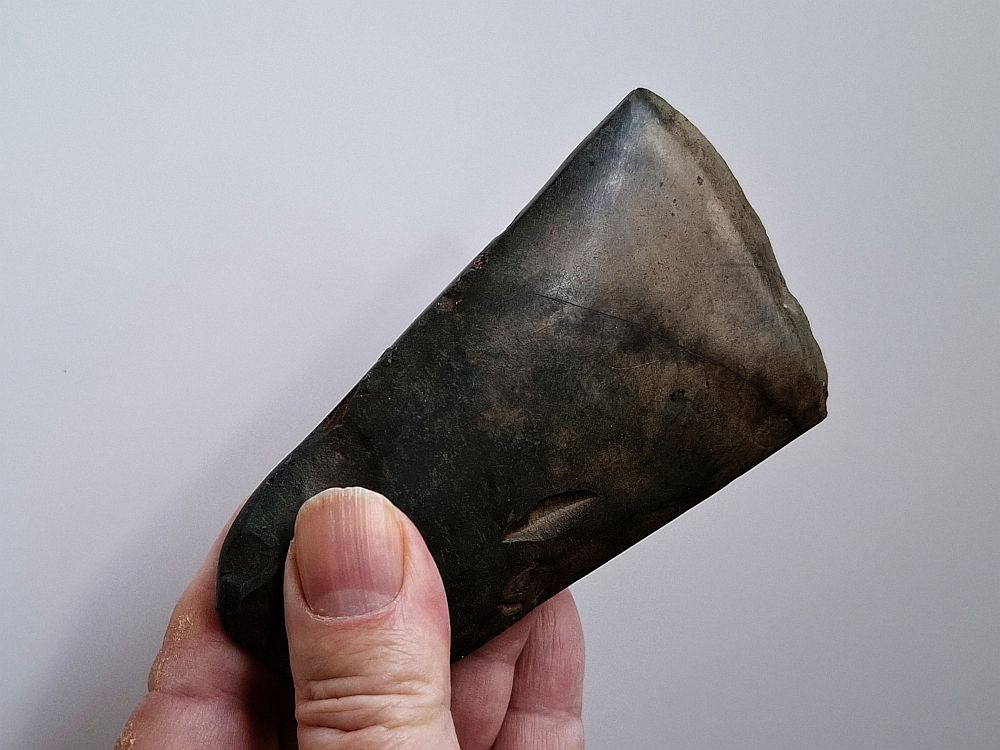
Erst waren es grob behauene Steine, die durch Absplitterungen scharfe Kanten erhielten. Im Neolithikum, das sich bei uns zwischen 5.800 und 4.000 v. Chr. entfaltet hat, gab es dann fein polierte Steinbeile. Bronze war erst ab dem dritten Jahrtausend v. Chr. in Gebrauch. Zeug aus Eisen kam in Nordeuropa ab zirka 750 v. Chr. auf.